There are many reasons to bring in an outside consultant, not the least of which is to get an outside perspective on your project, problem, or overall business effectiveness. Business consultants can help you see what’s working and what’s not and pinpoint exactly where you should target your resources for maximum return on your investment.
Engineering consultants, however, not only bring a fresh set of eyes to your project; they bring an expert’s perspective and skill set to your team. In many cases, organizations turn to materials engineering consulting when internal teams need specialized technical insight to improve performance, reliability, or manufacturability.

What Is an Engineering Consultant in Materials & Manufacturing Environments?
Engineering consultants have expertise in engineering, science, or other technologically specialized areas. They work with municipalities, private businesses, and even other contractors to address problems specific to their skill sets. In manufacturing environments, this often includes working alongside internal teams or injection molding consultants to improve tooling design, material selection, and process stability.
An engineering consulting team frequently includes some consultants who act in more managerial roles as well as those who specialize in niche scientific or technical roles.
These strategy-focused engineering consultants can help your business implement new initiatives, help in project management, and improve performance by applying the specialist consultants’ expert knowledge and skills to your project. Their work frequently supports broader operational excellence consulting efforts by aligning technical decisions with operational goals.
An engineering consulting team that closely fits the demands of your organization or project can supplement your resources and knowledge in exactly the ways that you need and for as long as you need. They can also provide a third-party perspective that can be invaluable for identifying the causes of issues and developing creative solutions.
Why Hire an Engineering Consulting Team Instead of Building In-House Expertise?

Hiring a full-time employee when you need certain specialized knowledge for a project can not only exceed your budget but can be an unnecessary long-term addition to your organization.
For example, let’s say you are trying to improve the productivity of your merchandise distribution system. You may want someone to evaluate the weaknesses in your current system, then repair or redesign the machinery and software that organizes your operation.
You’ve estimated this will be a full-time job for a team of specialized experts for six months to a year. However, once the overhaul is completed, this team may be an underused asset or a costly liability if you don’t have other systems slated for overhaul.
In addition to being an efficient way to bring in the labor and expertise you need, hiring a consultant lets you avoid the overhead of onboarding new personnel. An engineering consultant integrates into your existing team to work on a specific, targeted project or issue, bringing highly specialized, expert knowledge and/or technical capabilities that often support cost reduction consultants and improvement initiatives.
You don’t need to spend time on administrative issues like benefits, business cards, or support resources; an engineering consultant gets right to work.
How Engineering Consulting Drives Measurable Operational Excellence Across Industries
One of the most overlooked advantages of hiring an engineering consulting firm is its direct impact on measurable operational results. While many organizations associate engineering support with design or troubleshooting, the reality is that strong engineering engagement plays a central role in sustained operational excellence consulting outcomes.
Engineering consultants bridge the gap between strategy and execution. Instead of recommending theoretical improvements, they work directly within production environments, evaluating materials, equipment performance, tolerances, cycle times, and failure points. In manufacturing settings, this often includes hands-on collaboration with production teams, quality engineers, and maintenance staff to eliminate recurring issues at their source.
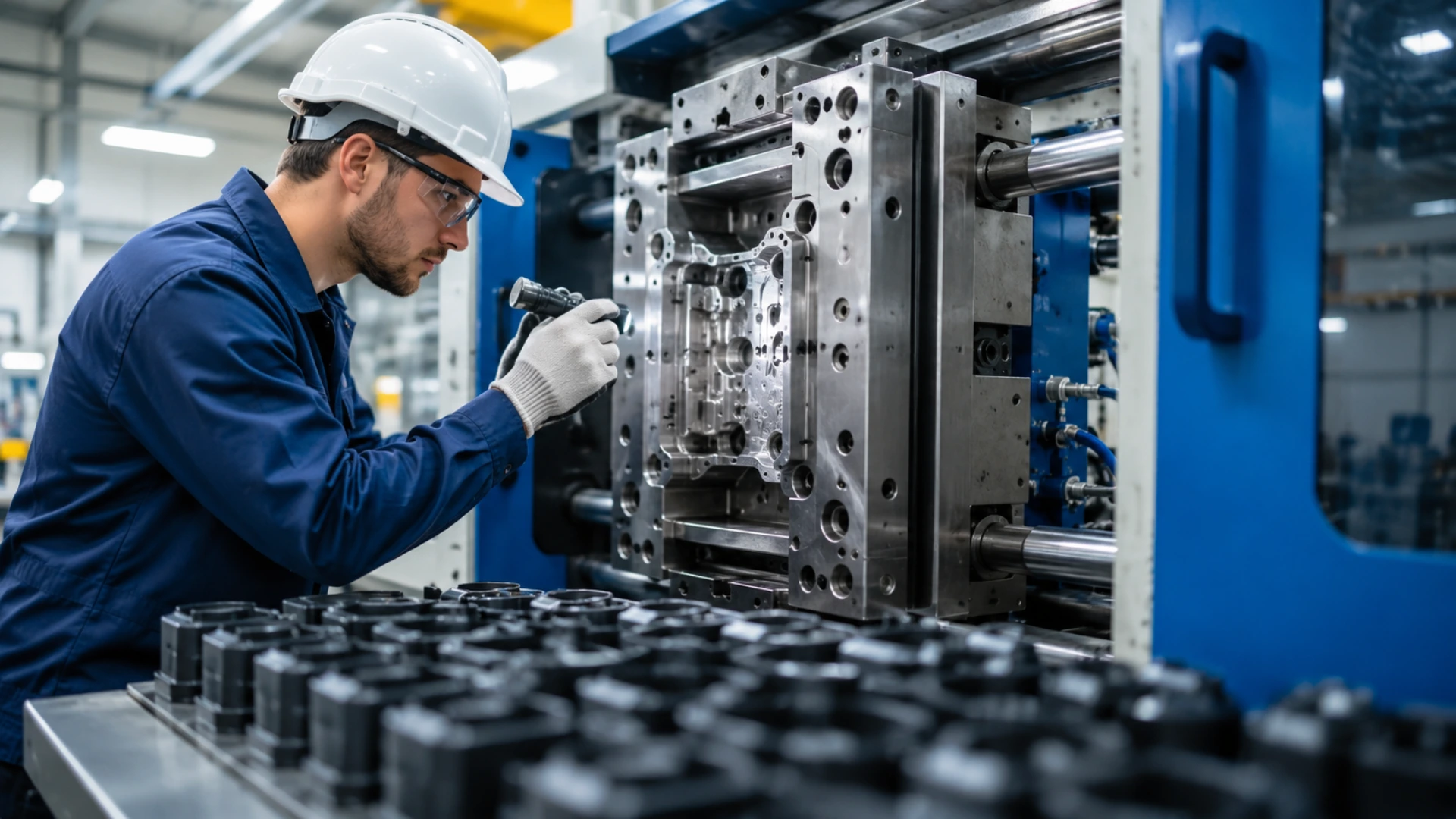
Through materials engineering consulting, organizations can improve product durability, reduce scrap rates, and eliminate overengineering that drives unnecessary costs. In injection molding and other high-volume manufacturing processes, consultants assess mold design, resin behavior, cooling systems, and part geometry to improve yield and consistency. These improvements directly support operational KPIs such as throughput, uptime, and cost per unit.
What differentiates strong operational excellence consulting firms from traditional advisors is execution. Engineering consultants do not stop at analysis. They validate solutions on the floor, ensure changes are practical, and help teams adopt new standards. This execution-first approach ensures that recommendations translate into real operational improvements, not just documentation.
When engineering consulting is aligned with broader operations consulting services, organizations gain both technical depth and operational discipline. The result is faster problem resolution, improved performance visibility, and long-term capability building within internal teams.
Engineering Consulting as a Cost Reduction and Risk Mitigation Strategy
While many companies engage consultants during periods of growth, engineering consulting is equally valuable when cost pressures increase or operational risks emerge. Unlike broad cost-cutting initiatives, engineering-led improvements focus on eliminating waste without sacrificing performance or quality.
Cost reduction consultants often rely on engineering insight to identify inefficiencies hidden within materials, processes, and equipment usage. Engineering consultants analyze where excess material is being used, where tolerances are tighter than necessary, and where outdated processes are inflating operating costs. These insights allow organizations to reduce costs structurally rather than through short-term cuts.
Risk mitigation is another critical benefit. Engineering consultants identify failure modes before they result in downtime, recalls, or safety incidents. In regulated industries such as aerospace, automotive, and healthcare manufacturing, this proactive approach protects both revenue and reputation.
By working closely with internal teams, engineering consultants help organizations establish better controls, clearer documentation, and stronger validation processes. These efforts strengthen compliance while also improving operational flexibility. When combined with broader operations consulting services, engineering consulting ensures that cost reduction efforts do not introduce new risks or operational instability.
Ultimately, engineering consulting provides organizations with confidence—confidence that decisions are technically sound, operationally viable, and financially responsible.
FAQ
What types of companies benefit most from materials engineering consulting?
Companies that manufacture physical products benefit significantly from materials engineering consulting, particularly those operating in industries where performance, durability, and compliance are critical. Automotive, aerospace, heavy equipment, food manufacturing, and medical device companies frequently engage materials engineers to improve product quality and reduce defects.
Materials engineering consulting helps organizations select the right materials for specific applications, optimize formulations, and understand how materials behave under real-world conditions. This reduces failures, improves consistency, and supports long-term operational reliability. Even organizations with strong internal engineering teams often rely on external consultants to address complex challenges or accelerate improvement initiatives.
How do injection molding consultants improve manufacturing performance?
Injection molding consultants focus on improving the efficiency, consistency, and quality of molded components. They evaluate tooling design, resin selection, machine settings, cooling systems, and cycle times to identify opportunities for improvement.
By addressing issues such as warpage, sink marks, short shots, and excessive scrap, injection molding consultants help manufacturers increase yield and reduce rework. Their insights also support faster production ramp-ups and smoother process transfers. When aligned with operational goals, their work contributes directly to lower costs and improved throughput.
How is engineering consulting different from general operations consulting services?
Engineering consulting focuses on technical depth—materials, equipment, processes, and design—while operations consulting services address broader workflows, performance management, and execution discipline. Engineering consultants solve the “how” at a technical level, while operations consultants align people, processes, and metrics.
When combined, these disciplines create a powerful improvement model. Engineering consulting ensures solutions are technically sound, while operations consulting ensures they are scalable, sustainable, and embedded into daily operations. This combination is a hallmark of effective operational excellence consulting firms.
When should a business engage an operational excellence consulting firm?
Organizations should consider engaging operational excellence consulting firms when performance plateaus, costs increase, or recurring issues persist despite internal efforts. Engineering challenges, quality issues, or production inefficiencies are often early indicators that external expertise can accelerate improvement.
Rather than waiting for a crisis, proactive engagement allows organizations to stabilize operations, strengthen capabilities, and build resilience. Firms that combine engineering expertise with execution-focused consulting deliver faster, more sustainable results than advisory-only approaches.
Partnering with an engineering consulting firm can help your organization add the resources it needs to enhance productivity and success, improve product quality, overcome barriers to growth, and promote innovation and efficiency. Contact Cornerstone Consulting Organization to consult with our team of experienced engineering consultants.
Cornerstone aims to provide the best ROI for your business. Our professionals have a wide variety of areas of expertise, previous experience, and technical specialties, including aerospace, automotive, heavy equipment, defense contracting, food manufacturing, retail, and healthcare.
Contact us today to discuss your engineering consulting needs. CCO cannot and does not provide legal advice. It’s important to consult with qualified counsel before adopting any new policies. It’s also your responsibility to determine whether legal review of work product is necessary prior to implementation.

 Uncover the ways we can strengthen your business operations.