How Supply Chain Management Services Improve Operational Resilience
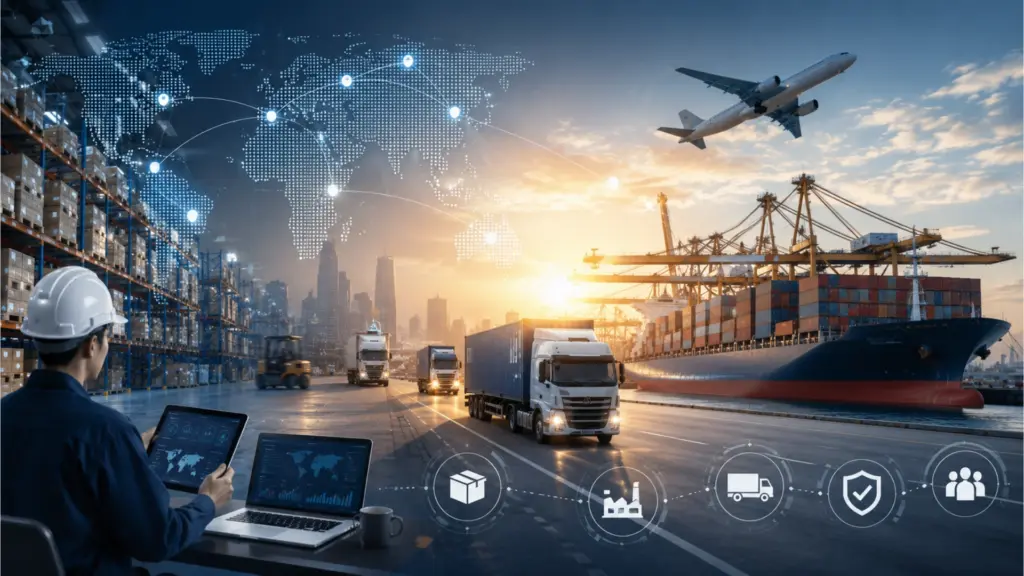
Disruptions in the global environment such as backlog at ports and rapid demand changes have shown one thing resilience is no longer an option. Businesses that once looked upon their supply chains as backend operations are now recognizing their strategic value in gaining a competitive advantage. And here is where the supply chain management services become extremely relevant to organizations looking to develop supply chain networks capable of not only enduring the disruptions but adapting to them and recovering faster than their competitors. In situations where executives try to figure out where they should make the next investment, there is not a question about the necessity of improving supply chain performance but rather about how they can achieve it without creating unnecessary complexity. Effective supply chain management consulting helps organizations address this challenge by connecting supply chain strategy with operational execution, risk management, and measurable performance improvement. What Are Supply Chain Management Services? A Guide to Supply Chain Optimization The scope of supply chain management services involves planning, execution, and monitoring all the stages involved in the life cycle of the product, from procurement of raw material to delivery of the final product. In addition to this, a lot of companies provide logistics strategy services as well. In logistics strategy services, coordination of transportation systems, supplier relations, and inventory strategies is done in accordance with the overall longterm strategy of the business organization. For organizations undergoing business transformation, these services can also help connect procurement, inventory, warehousing, transportation, and workforce coordination into a more responsive operating model. The objective is not simply to manage the supply chain, but to improve its ability to respond to changing conditions. Why Traditional Supply Chains Struggle During Disruption and Risk The existing supply chain was created under conditions of stability rather than instability. Most companies use outdated forecasting techniques, manually coordinated interdepartmental operations, and visibility only within a firm’s perimeter. In case of the late delivery of a product from a supplier or blocking one of the shipping routes, the impact will be slow to recognize and even slower to correct. This problem usually stems from the absence of timely data exchange, rigid procurement agreements, and procedures which can neither increase nor decrease production quickly enough. In absence of a model for business transformation, problems tend to be solved in a reactive way. Modern supply chain risk management requires organizations to identify vulnerabilities before they become operational disruptions. This means evaluating supplier concentration, transportation dependencies, inventory exposure, demand volatility, and decision-making speed rather than waiting for a disruption to expose them. The 5 Core Areas of Modern Supply Chain Optimization Resilient supply chains are built on five interconnected pillars: Planning: Forecasting and scenario planning to foresee potential disruptions. Procurement: Supplier networks that are diversified and contracts that are flexible, rather than solely focusing on cost savings. Supplier diversification can reduce dependence on a single source and strengthen supply chain resilience. Warehousing: Inventory that is distributed and smart storage systems to mitigate any single point of failure. Effective inventory optimization helps balance service levels with carrying costs. Transportation: Flexible multimodal transport plans that respond to changes in capacity and costs. Strong transportation management allows companies to adjust routing and capacity when market conditions change. Workforce coordination :Teams with cross functional members capable of making swift decisions. Improvements in each individual component create their own value; however, true gains occur only when all these components work together as an integrated system. It is the essence of operational excellence services that provides the basis for this concept. A mature approach to supply chain optimization therefore looks beyond individual functions and evaluates how planning, procurement, inventory, transportation, and workforce decisions interact. What Resilient Supply Chains Do Differently Traditional Supply Chain Resilient Supply Chain Reactive approach to disruption Proactive supply chain risk management Single source suppliers Diversified, multitier sourcing Siloed departmental data Real time, shared supply chain visibility Fixed transportation routes Predictable shipping lanes Manual demand forecasting Artificial intelligence demand forecast Slow decision cycles Long decision cycle The difference is not simply technological. Resilient supply chains combine processes, technology, supplier relationships, and operating capabilities to create greater operational resilience. AI, Forecasting & Real-Time Visibility Tools for Supply Chain Resilience The current supply chain management approach has increasingly relied on AI powered forecasting and visibility software that consolidates data received from suppliers, carriers, and warehouse into one dashboard highlighting the possible problems such as delay in delivery or shortage of goods. Also, predictive analytics allows planning demand effectively, avoiding both overproduction and underproduction of products. Combining AI with alerts, you will be able to change the sourcing and routing strategy in hours not days, which makes all the difference between resilient businesses and those still relying on spreadsheets and constant communication. These technologies support AI supply chain forecasting by identifying demand patterns, potential shortages, transportation disruptions, and inventory risks before they become major operational problems. Besides, the technology provides executives with a single source of consolidated data. Thus, instead of navigating multiple contradictory reports issued by the procurement, warehousing, and transportation departments, decision making will be faster and more accurate. Improved supply chain visibility also enables leaders to understand how a disruption in one part of the network could affect production, inventory, customer fulfillment, and financial performance elsewhere. Example: Recovering from Supplier & Transportation Delays There is now a delay of two weeks on account of the main supplier’s problem, along with the port delays. If the organization does not have integrated processes in place, then they might be unaware of the delay until they run out of stock. However, in an adaptive supply chain system, any delay is spotted early because of monitoring the supplier’s performance and initiating alternate sourcing through a secondary supplier and diverting the current inventory through another distribution channel. This type of response demonstrates how supply chain resilience consulting can help organizations move from reactive disruption management toward proactive risk mitigation. Instead of responding after inventory has been depleted, leaders can use supplier risk data, inventory levels, transportation information, and demand forecasts to activate contingency plans earlier. The KPIs Supply Chain Leaders Monitor Most Closely for Operational Resilience To measure resilience, not just efficiency supply chain leaders track metrics such as : OTIF (on time, in full)