
What Does Engineering Consulting Actually Improve in Manufacturing Operations?
Engineering problems in manufacturing environments rarely announce themselves clearly. A throughput constraint that looks like a scheduling issue may be a fixturing problem. A quality variation that appears to be a supplier issue may be a process capability gap. Engineering consulting brings structured diagnostic capability to these complex, multi-variable operational challenges — and then stays to implement the fix.
What Is Engineering Consulting?
Engineering consulting is the application of technical expertise to identify, analyze, and resolve operational performance gaps in manufacturing, production, and industrial environments. Unlike general management consulting, engineering consulting is grounded in process physics, equipment science, and manufacturing systems — not organizational theory alone.
Why Manufacturers Bring in Engineering Consultants
- Internal engineering teams are consumed by day-to-day firefighting and cannot dedicate capacity to systematic root-cause work.
- Problems require cross-disciplinary expertise that no single internal team member can provide.
- An objective external perspective surfaces blind spots that have been normalized inside the operation.
- Faster diagnosis and implementation are required to meet a customer or regulatory deadline.
The Most Common Engineering Bottlenecks
|
Bottleneck |
Typical Root Cause |
Engineering Response |
| Throughput constraints | Fixturing, tooling wear, scheduling logic |
Time-motion analysis + process redesign |
|
Equipment downtime |
Reactive maintenance, inadequate PM schedules | Reliability-centered maintenance implementation |
| Process instability | Variation in raw materials, tooling, or environment |
SPC deployment + capability studies |
|
Quality variation |
Out-of-tolerance inputs or process drift | Gage R&R + control plan tightening |
| Workflow inefficiencies | Layout constraints, redundant handling steps |
Value stream mapping + layout redesign |
Engineering Consulting vs Traditional Operations Consulting
|
Dimension |
Engineering Consulting |
Operations Consulting |
|
Primary focus |
Technical systems and process physics | Organizational and workflow efficiency |
| Diagnostic method | Equipment analysis, capability studies, SPC |
Process mapping, interviews, KPI review |
|
Implementation depth |
Hands-on technical execution | System and behavior change |
| Best use case | Equipment, quality, throughput problems |
Workforce, scheduling, and management gaps |
Example: Reducing Downtime Through Process Optimization
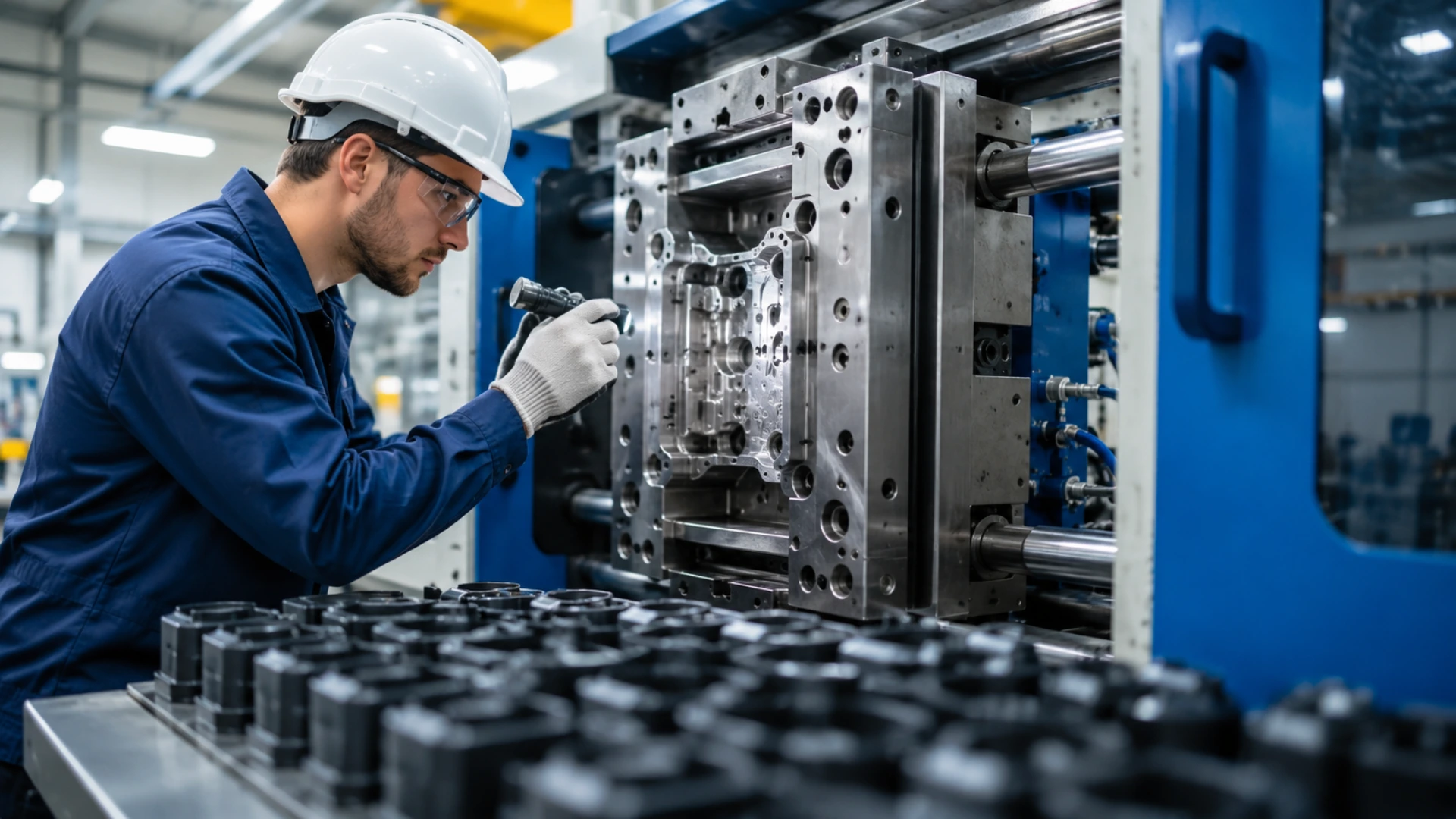
A plastics manufacturer was experiencing 22% unplanned downtime on a high-volume injection molding line. Initial assessments blamed operator error. Engineering analysis revealed that the actual root cause was a combination of tool wear rates that exceeded the PM schedule and an incoming resin moisture spec that was borderline for the process window.
Execution-focused operational consulting teams often combine engineering analysis with frontline implementation to improve throughput and production stability. In this case, adjusting the PM interval and tightening the incoming resin spec reduced unplanned downtime to below 8% within six weeks.
KPIs Used in Engineering Performance Improvement
- OEE (Overall Equipment Effectiveness) — the composite measure of availability, performance, and quality.
- Cp and Cpk — process capability indices that quantify how well a process operates within specification.
- MTTR (Mean Time to Repair) — measures diagnostic and repair speed.
- MTBF (Mean Time Between Failures) — the reliability indicator that drives PM frequency decisions.
- First-Pass Yield — the percentage of units that meet specification without rework on the first attempt.
Frequently Asked Questions
What does engineering consulting include?
Technical diagnostics, root-cause analysis, process improvement, equipment reliability, quality systems, and hands-on implementation support.
How do engineering consultants improve manufacturing?
By identifying technical root causes of performance gaps and implementing solutions at the equipment, process, and workforce levels.
What KPIs matter most in engineering operations?
OEE, Cpk, MTTR, MTBF, and first-pass yield are the most decision-relevant for manufacturing engineering.
When should manufacturers use engineering consultants?
When internal teams lack capacity or expertise to solve recurring technical problems that are affecting throughput, quality, or reliability.



 Uncover the ways we can strengthen your business operations.